Pricing
A two-year-old shop and a national contractor don't have the same problem, so they don't pay the same fee. Every tier includes every branch, every user, and the weekly analyst.
The audit is no charge either way — it tells you your number before you commit to anything.
What every one of them includes:
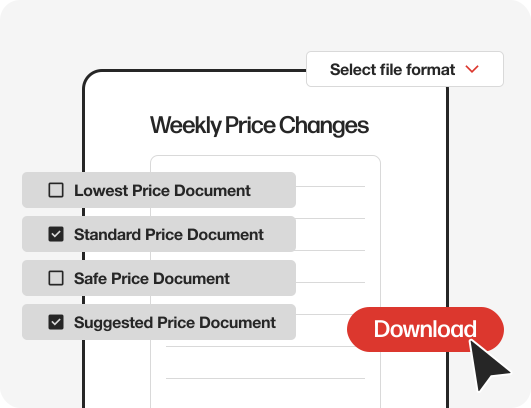
Same coverage of your region. Same weekly pricing. Same analyst, same workspace, same cost exports, same everything. Nothing is held back for the expensive tier — the only thing that changes between these three columns is the number.
You move up a tier when you're ready, not when a contract says so. Established contractors are priced per region, because each region is a separate market with its own distributors and its own pricing.
We're procurement specialists. Negotiating is the entire job — we'd be a little disappointed if you didn't try.
Why $300
A new shop pays close to list on nearly everything. No volume, no agreements, no leverage — and no spare hours to go chasing prices while you're trying to win work.
That's precisely when knowing your real numbers is worth the most, and precisely when nobody will give them to you. It's also when a few points of margin decides whether you make it.
So we didn't build a starter edition. A two-person shop on $300 gets the identical product a national contractor gets — the same coverage of their region, the same workspace, the same analyst writing the same weekly briefing. We'd rather grow with you than wait until you're big enough to be worth selling to.
Most shops that size don't have a supply chain manager either — so we act as one. Here's what that looks like →
The math
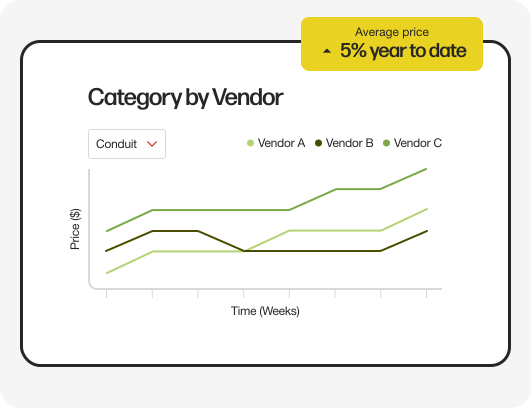
A contractor at $5M of material spend with a 4% gap is leaving $200,000 on the table. One region at $2,000/month is $24,000 a year.
You don't have to take our word for the gap, either — the audit measures it on your actual purchases before you commit to anything.
A second AI audits every finding against the data before it's sent — if a claim can't be verified, the email is held. And the savings number can go down: we count realized savings only, recomputed weekly, eroding automatically if a vendor walks a price back.
Our longest-running region sits at a 5.9% realized rate on tracked spend — $56,663 across 714 tracked parts this year. That's the number to hold us to, not the headline gap.
Send 12 months of purchase history; in a week you'll know your annualized gap. No charge, no call — the audit is how we earn the subscription.